Comprehensive Denpasar Visitor Manual
Architecture, Symbolism, and the 17-8-45 Independence Code
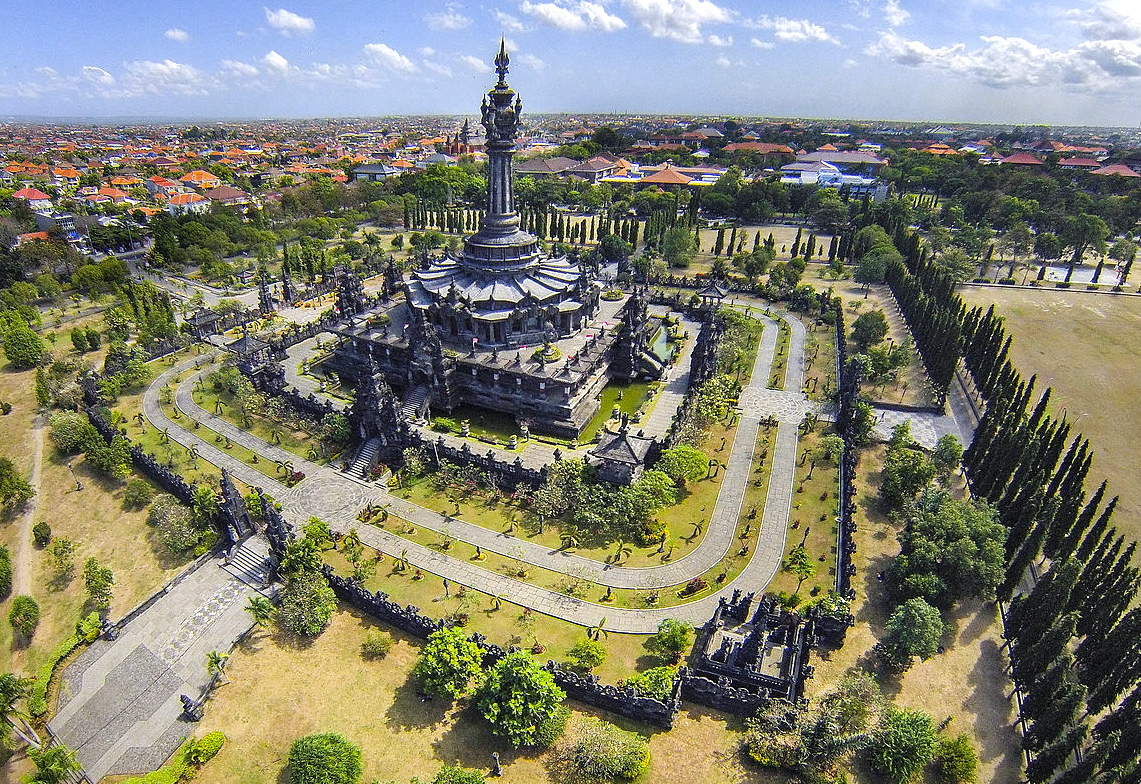
Most beach travelers cross Bali without ever stopping inside its provincial capital, yet Bajra Sandhi stands at the center of Niti Mandala Renon as one of modern Indonesia's sharpest architectural statements. Designed by Balinese architect Ida Bagus Gede Yadnya, the stone tower takes the distinct silhouette of a priestly ceremonial bell known as a bajra. In Balinese Hindu ritual, a high priest rings this double-ended bronze bell during prayer to focus awareness and honor ancestral resilience.
Every primary structural measurement encodes Indonesia's independence proclamation date of August 17, 1945. Look at the numbers carefully as you climb toward the central entrance gallery. Visitors ascend exactly seventeen stone steps at the main approach gate, pass beneath eight towering structural pillars supporting the octagonal interior pavilion, and stand beneath a carved spire rising forty-five meters above the landscaped lawns of Renon Civic Square. Architects aligned those figures deliberately so school groups and foreign travelers alike read the monument's civic timeline simply by looking up through its stonework.
Traditional Balinese cosmology shapes the ground plan just as strictly as historical mathematics. Following Tri Mandala spatial principles, the complex moves visitors inward and upward from outer public greenery toward quiet contemplation. Down on the perimeter lawn, morning joggers and evening families gather peacefully beside reflection ponds and manicured hedges described in our Renon Park and Sunday sports guide. Once you cross the stone moat bridge and enter the octagon, noise from Jalan Raya Puputan fades behind cool carved tuff walls.
Inside the 33 Dioramas: Walking Clockwise Through Balinese History
Take your time inside Madyaning Mandala on the middle circular level. Thirty-three miniature three-dimensional dioramas wrap around the gallery corridor in chronological order, walking visitors clockwise from early prehistoric island settlements through modern civic nationhood. Each recessed display pairs sculpted figures with dramatic background murals and concise bilingual plaques explaining battles, treaties, irrigation guilds, and court life.
Early bays illustrate ancient hunter-gatherers shaping stone implements beside volcanic lakes, followed by the arrival of rice cultivation and the cooperative subak water-sharing committees that still govern Balinese terraces today. Moving further clockwise brings visitors into the classical era of the Gelgel dynasty and sixteenth-century court patronage, when temple carving, gamelan ensembles, and palm-leaf manuscripts spread across southern kingdoms.
The mood grows intense as you turn into the nineteenth and early twentieth centuries. Several displays depict the tragic colonial confrontations known as puputan, meaning a collective stand to the very end rather than surrender under armed siege. Look closely at the scene portraying Colonel I Gusti Ngurah Rai leading fighters at Margarana on November 20, 1946. Standing quietly in front of that illuminated case connects street names across Denpasar and Bali's international airport directly to real individuals in island memory. Read extended historical essays and etiquette rules on our History and Cultural Tips page before stepping onto the mezzanine gallery.
The Spiral Climb to Utamaning Mandala Viewing Deck
After walking all thirty-three scenes, climb the narrow spiral staircase spiraling up inside the monument's central stone core. Two distinct stone ribbons allow comfortable ascending and descending traffic, though narrow curved treads call for steady flat walking shoes rather than slippery flip-flops. As you emerge into Utamaning Mandala near the crown of the bell tower, open window arches frame panoramic views stretching across Denpasar rooftops.
Clear mornings reveal far more than government offices lining Renon Square. Look north toward Bali's central volcanic mountain skyline rising above green urban plains before midday clouds gather. Looking east and south traces wide residential avenues leading toward Sanur's coastline. Pause here for ten minutes to catch cool cross-breezes through the masonry openings while taking photographs without glass glare.
Ticketing, Cash Policy, Hours, and Footwear Etiquette
Planning practical entry details ahead avoids small hiccups at the eastern ticket booth. Foreign guests currently pay IDR 100,000 per adult at the main entrance gate, while Indonesian citizens carrying national ID pay IDR 30,000 per adult (IDR 20,000 for domestic children), and children under five enter free of charge. Keep physical Indonesian Rupiah banknotes ready before arriving. The monument ticket desk strictly prefers cash payments and frequently cannot process foreign chip or contactless cards reliably.
Standard opening doors run from 8:00 AM to 4:30 PM Monday through Friday, shifting slightly to 9:00 AM through 4:30 PM on Saturdays and Sundays. Plan ahead around Balinese Saka calendar observances: the entire complex closes completely during major Hindu public holidays, especially the island-wide day of silence known as Nyepi. Pack a clean pair of cotton socks in your daypack too. Certain inner stone floors inside the upper hall require visitors to step out of outdoor shoes to protect polished stone tiles, and wearing clean socks keeps bare feet comfortable on cool slabs.
Prefer hassle-free pickup with climate-controlled transport and ticket handling included? Compare verified private driver packages and guided city tours starting from $24.68 to $85.00 USD on our Tickets and Private Tours comparison page, where advance Viator reservations include hotel pickup and 24-hour free cancellation.
Reaching Renon Civic Square & Pairing Denpasar Cultural Sights
Denpasar traffic behaves differently from southern resort avenues around Kuta or Seminyak. Morning commuter surges pack central intersections between 7:30 AM and 9:00 AM, while afternoon school and office departures slow Jalan Raya Puputan from 4:30 PM until 6:30 PM. Aiming for a mid-morning arrival around 9:30 AM hits a comfortable sweet spot: public rush hour clears, interior diorama halls remain uncrowded, and rooftop mountain silhouettes often stay visible before noon haze sets in.
Sanur stays make the easiest launch point at roughly fifteen to twenty minutes west by Grab or Gojek ride-hailing car. Guests based in Seminyak, Kuta, Nusa Dua, or Ubud should allow forty-five to seventy-five minutes depending on corridor congestion, or check exact bus routes, eastern gate parking, and Sunday Car Free Day street closures inside our How to Get There transit blueprint. Once finished at Bajra Sandhi, stretch your half-day Denpasar loop across four rewarding stops covered in our Nearby Sights guide: Puri Jagatnatha Temple, the neighboring Bali Museum, Werdi Budaya Art Centre, and Museum Sidik Jari just five minutes away.
Quick Pre-Visit Checklist for First-Time Travelers
- Confirm operating days: Visit Monday to Friday after 8:00 AM or weekends from 9:00 AM, double-checking for Balinese temple holidays such as Nyepi.
- Carry small cash bills: Keep IDR 100,000 notes and smaller change for the gate booth and bottled water outside the park.
- Wear gripped footwear plus socks: Slip-on sandals slow down spiral staircase climbs, while socks make barefoot marble floor segments comfortable.
- Sequence your morning smartly: Pair an unhurried indoor hour at Bajra Sandhi with Bali Museum next door or sunset walks along nearby Sanur Beach.
Essential Questions Before Visiting Niti Mandala Renon
Do visitors pay admission just to walk inside Renon Park lawns?
No ticket is needed for the outer public parkland. Walking the paved outer running oval, sitting under shaded banyan trees, or watching kites on Lapangan Puputan Margarana Renon is completely free for locals and guests alike. Admission tickets (IDR 100,000 for foreign adults, IDR 30,000 for Indonesian citizens) apply only when crossing into the main monument museum foyer, 33 historical dioramas, and the upper viewing chamber.
How much time should travelers allocate inside the monument building?
Allow sixty to ninety minutes inside the three vertical tiers. Reading plaques beside all thirty-three dioramas cleanly takes forty minutes at an easy pace, leaving extra minutes for the spiral climb up to Utamaning Mandala and photos along the reflection moat outside.
Are cameras, backpacks, or drones allowed inside the exhibition rooms?
Personal smartphone photography inside Madyaning Mandala and from the upper viewing tower carries no extra charge. Heavy professional tripods, wedding shoots, and flying aerial drones across government square lawns require advance permits from Denpasar's local cultural office.
Should guests book a guided Denpasar tour or arrive independently?
Independent visits suit travelers staying close by in Sanur who want a quick solo stop with cash Rupiah in hand. Travelers staying across Kuta, Seminyak, or Ubud who prefer door-to-door air-conditioned pickup plus combined entry to Bali Museum and Jagatnatha Temple often save transit stress with a curated four-to-six-hour private tour through our tickets comparison desk.
 $62.00
 $85.00
 $55.00